
Price, Perception, and Profit
As anyone involved in bringing a product to market knows, pricing is perhaps the single most potent lever for influencing consumer choice. It’s far more than just a calculation of cost plus margin; price acts as a complex signal communicating value, quality, and brand positioning.
A recent paper by Divyanka chitte and Dr.Ritu bharti, titled “Examine the impact of pricing strategies on consumer behavior”,, offers a critical look at this relationship, moving beyond traditional economic models to explore the psychological and behavioral impacts of common pricing tactics. If you’ve ever wondered why that $9.99 price tag feels so much better than $10.00, this research provides tangible answers and actionable insights for businesses operating in today’s competitive landscape.
The Research Deep Dive: Objectives and Methodology
The primary goal of this study was to investigate the relationship between various pricing strategies and consumer purchasing decisions, while identifying the psychological and behavioral factors influencing these responses,.
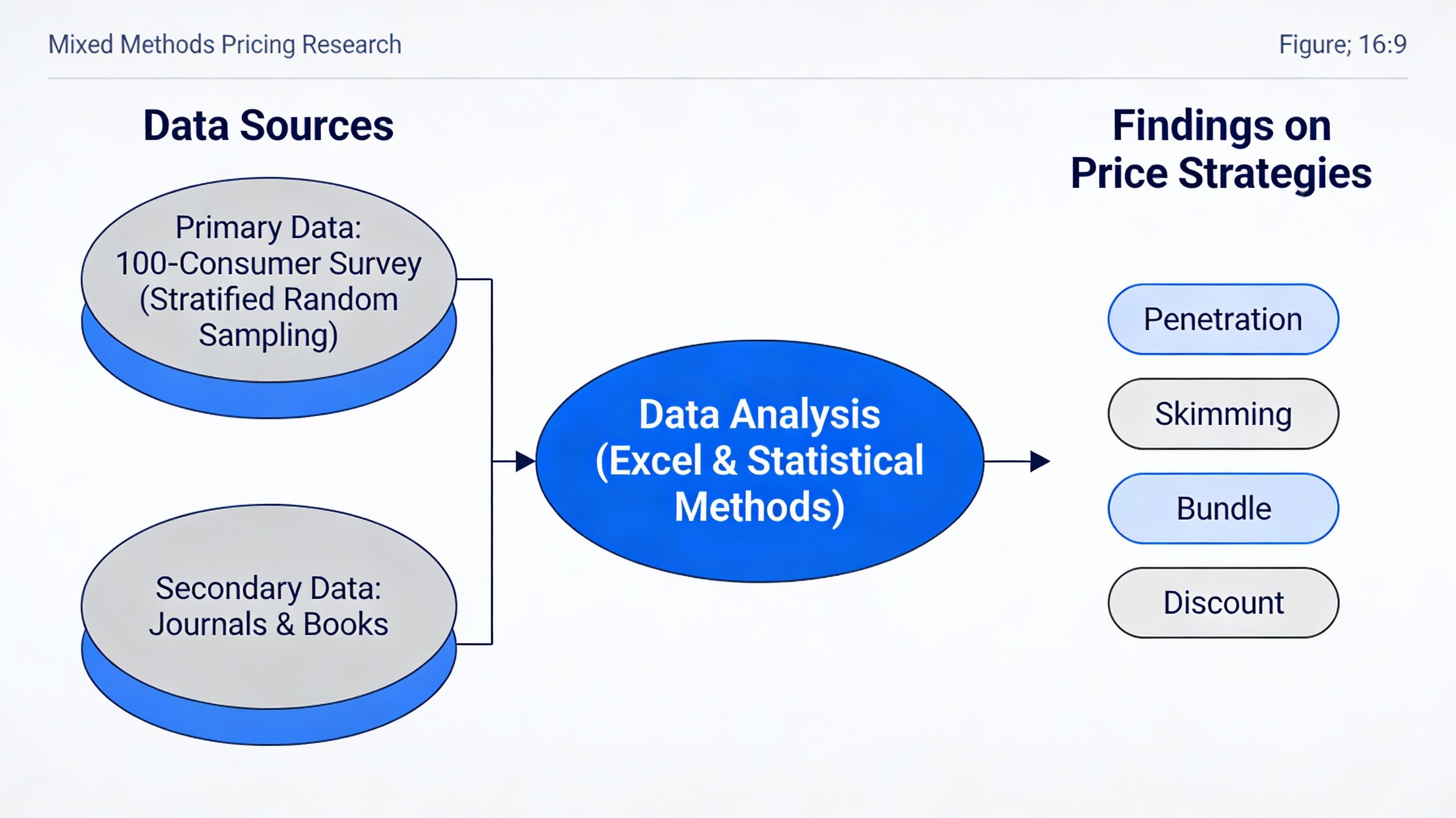
The authors employed a mixed-methods approach, combining qualitative and quantitative research techniques, and used a descriptive and exploratory research type,. Primary data was collected via structured questionnaires administered to a stratified random sample of 100 consumers, predominantly focusing on urban residents across India aged 18–50 years,,,.
The methodology specifically explored consumer perceptions and attitudes toward four major pricing tactics: penetration pricing, skimming pricing, bundle pricing, and discount pricing. Additionally, the researchers evaluated variables such as price sensitivity, brand loyalty, and responsiveness to promotions.
Core Findings: What Really Drives the Buyer?
The study concluded definitively that pricing strategies have a significant impact on consumer behavior. The results highlighted that consumers evaluate price not just in monetary terms, but as a reflection of value and fairness,.
Here are the key findings related to specific pricing strategies and general consumer psychology:
- Strategy Effectiveness by Product Stage: The research revealed clear applications for different pricing models:
- Penetration Pricing was found to be most effective for new products entering the market.
- Skimming Pricing (setting high initial prices) proved most effective for luxury products, reinforcing the idea that consumers often use price as an indicator of superior quality,,.
- Bundle Pricing is effective when applied to complementary products.
- Discount Pricing is best used for increasing sales and incentivizing purchases.
- Price Sensitivity and Psychology: The data underscores the deep psychological roots of purchasing decisions:
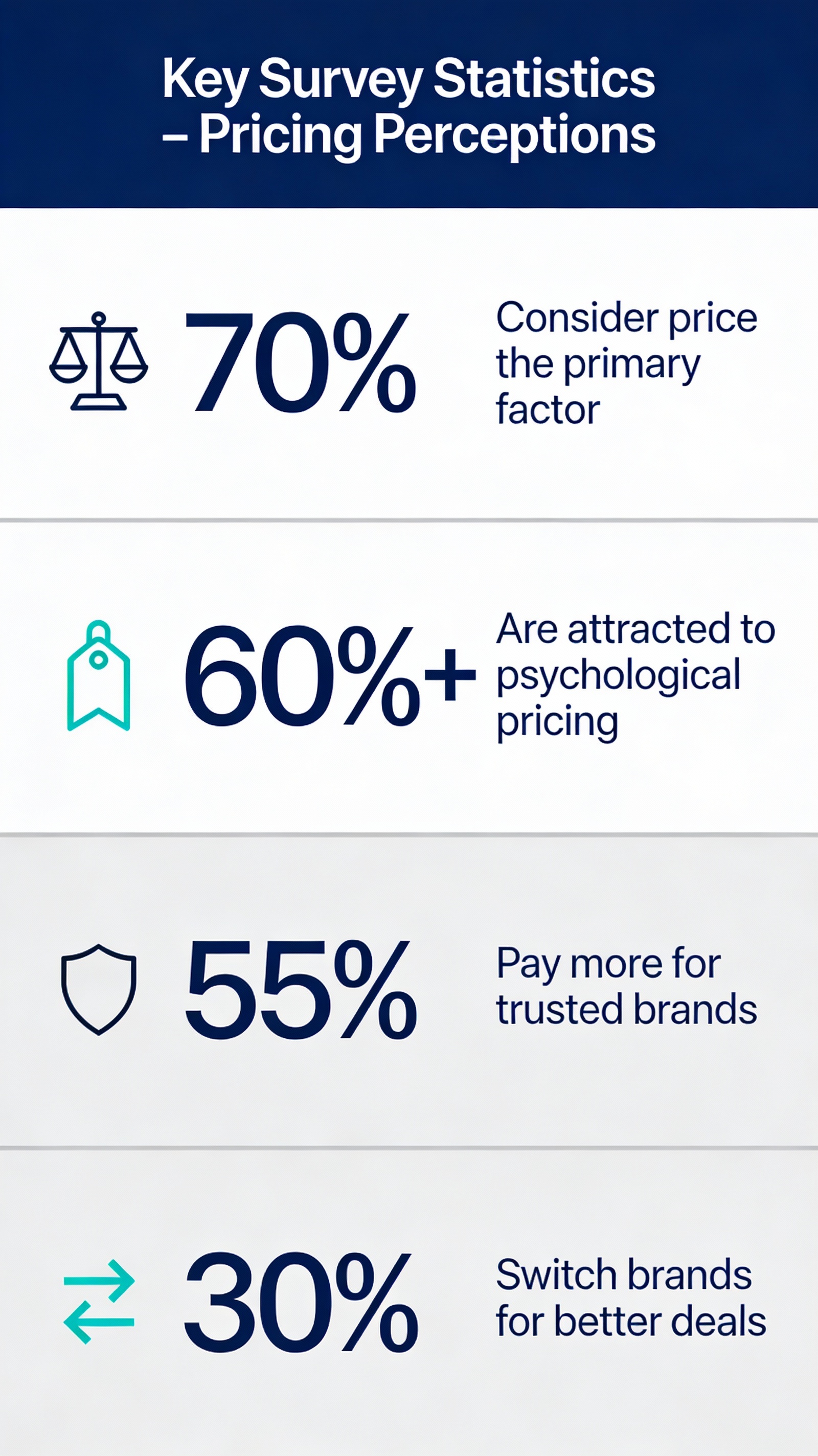
- A significant 70% of respondents consider price as the primary factor before committing to a purchase.
- Psychological pricing (e.g., using ₹99 instead of ₹100) attracts more than 60% of respondents and significantly affects impulse buying, aligning with established concepts like charm pricing,,.
- Young adults (18–30) exhibit higher responsiveness to promotions and discounts.
- The Loyalty Balance: While 55% of consumers are willing to pay a higher price for trusted brands, 30% indicated a willingness to switch brands for better deals. This emphasizes that while brand equity is vital, price competitiveness remains essential.
Application in the Industry: Navigating the Pricing Maze
Businesses face a multi-faceted challenge when designing pricing strategies. Consumers are not homogeneous; their responses vary significantly based on income, background, and psychological traits, making segmentation difficult. Furthermore, consumer perception of a “fair price” is subjective and, if violated (e.g., perceived exploitation during peak demand), can severely damage brand trust,.
The study provides actionable guidance to tackle these complexities:
- Move Beyond Flat Pricing: Companies must move beyond a “one-size-fits-all” approach and adopt segmented and dynamic pricing strategies to cater to diverse groups.
- Embrace Tiered and Value-Based Pricing: To capture a wider market, offer different versions of products at varied price points (tiered pricing). Crucially, businesses should integrate value-based pricing, focusing on communicating benefits and quality rather than competing solely on low prices.
- Manage Discount Addiction: While discounts boost conversion, businesses must be careful to balance them with product perception. Consumer adaptation to discounts is a serious challenge, as frequent sales reduce the product’s perceived value at full price. Using limited-time offers and flash sales can create necessary urgency while maintaining overall perceived value,.
The Product Marketing Manager (PMM) Playbook
For Product Marketing Managers (PMMs), this paper provides a robust framework for positioning, segmenting, and launching products effectively.
PMM Key Takeaways:
- Strategic Strategy Selection: PMMs must align their pricing strategy with the product’s life cycle and target consumer base. For a high-end, innovative product launch, utilizing skimming pricing is supported by the data to signal prestige and quality,. Conversely, when entering a highly competitive market or launching an accessible product, penetration pricing is the recommended tactic.
- Leverage Psychological Tools: PMMs should actively use psychological strategies like charm pricing (e.g., £9.99) and anchoring (presenting a premium option next to the desired option) in their marketing materials and purchase flows, as these techniques significantly influence purchase decisions and impulse buying,.
- Prioritise Transparency and Fairness: When implementing sophisticated strategies like dynamic pricing (adjusting prices based on demand), PMMs must advocate for transparency to maintain customer trust and prevent consumers from feeling exploited,,,. Perceived fairness significantly influences customer satisfaction and loyalty.
- Balance Loyalty and Competitiveness: Since 55% of consumers value trusted brands highly, PMMs must continually emphasize brand value and benefits in their messaging to justify higher prices,. However, understanding that 30% are ready to switch for a better deal means competitive intelligence and monitoring competitor prices remain essential.
- Data-Driven Adjustments: The conclusion emphasizes the need for a continuous feedback loop. PMMs must regularly review and adjust pricing strategies based on market research and consumer feedback, ensuring adaptability to changing market dynamics.
The paper underscores that effective pricing requires marrying market dynamics with consumer psychology. Like a skilled orchestra conductor, a successful business must fine-tune every pricing note, from the initial launch price to the promotional discounts, to create a harmonious and profitable relationship with the customer.